Fictional Simplicity

I would love to conduct a scientific experiment in which one version of my brain read contemporary fiction while another read an old classic, a Jane Austen novel for example, and I could sit back and compare their experiences.

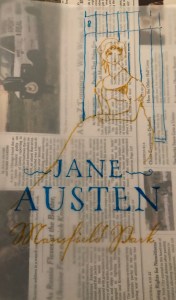
I’m about halfway through Gary Shteyngart’s fantastically funny beautifully written new novel, Our Country Friends. It is entertaining and theoretically immersive and yet I can’t seem to read more than a chapter or two without drifting…(did I pay my credit card bill? I forgot to sign my kid’s sports consent form! Is it cold in here?). Not that this isn’t a fairly common experience in my life, but here’s the strange thing: Last month I re-read Mansfield Park and I sunk into it like a warm bath and came out only when I was relaxed and slightly shriveled.

So I’m wondering if there is a connection. Not in the prose so much as the world it portrays. Shteyngart’s novel is literally of the moment, full of phones, Covid, helicopter parenting and ambitious neurotic people. In Austen, a long walk could be the highlight of the day. News arrives so sporadically that each new snippet can be chewed over for days before the next one arrives.

Think of all the things we need to remember today: Passwords, who to call when the heat doesn’t work. Is it oil? Propane? How to unclog a drain, pay bills, pay taxes. Directions to the dentist, all the various doctor appointments and what your health care plan will cover. Which former republic is Russia planning to invade? What horrible things are the Chinese government doing now, without repercussions? That’s without touching on the latest music, movies, tv shows and whether or not I even subscribe to the service which will allow me to watch them.

Maybe it’s age catching up with me, this desire to downscale the input. My brain is fed up and its way of telling me is to cut me off after a chapter of the latest fiction. It’s telling me that I really should be living in a time when I could spend an entire morning hand-washing the underwear I’ve probably been wearing for days at a time. Gross? Yes. But so much less stressful!

The Jeans Gene

One of the many traits that drifted down from my mom and attached itself to me, barnacle-like, was an interest in fashion. I was not/am not/will almost surely never be fashionable. But that interest is in me, defying my inner eye-rolls and deep attraction to jeans and sweatshirts (a woman I worked with once described my “style” as slobby chic).

My mom’s (enormous) closet was filled with designer suits for day and Pucci dresses for evenings out. She had boxes and trays of accessories specifically purchased to match an outfit. She loved to shop and some of our best bonding happened at Daytons Department Store in Minneapolis, where she tried to convince me to be someone other than me.

I had none of her flair and my interest was once-removed, but that did not stop me from taking a job at Vogue Magazine straight out of college. It was a crappy job and I was a fish laughingly far out of water, but it led to other, slightly less crappy jobs and, finally, to W Magazine and Women’s Wear Daily, where I was finally able to do what I really wanted, which was write (even if most of the writing was about fashion).

When this book, Women in Clothes, came out a few years ago, I was skeptical. I had recently gone freelance and brushed all (most) remnants of the fashion world from the seat of my yoga pants, but the authors (Sheila Heti, Heidi Julavits, Leanne Shapton) were interesting writers and thinkers so the book couldn’t be a deep dive into narcissism.

Well a little bit is, but most of the book is comprised of great stories of women with stories like mine — women who have complicated feelings about clothes. Some see their choices as an extension of their personality, others find solace in specific pieces. Some are vaguely hostile towards the idea of it.

The book itself gave me solace. I thought I was supposed to feel certain things about clothes. It helped me realize how fashion is so often entwined with psychology and how that is not a bad thing; it’s just a thing.

My Life in Poetry

Lately, in an effort to not think about politics and the state of things, at least in the morning, I’ve taken to listening to the poetry podcast, The Slowdown, hosted by Ada Limon. It’s not a new show — for awhile it was hosted by Tracy K. Smith — but for whatever reason it has recently pulled me in to the point where it is nearly as essential as coffee.

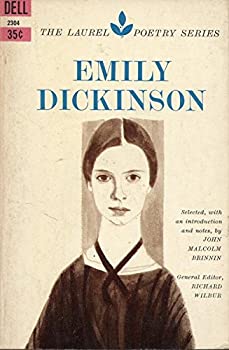
The format is simple: Ada Limon picks a poem and introduces it with a short essay. The poems are invariably great, but it is the essays that pull me in and I am always a little (embarrassingly) disappointed when she shifts from talking to reciting. It got me thinking about poetry in my life. I want to love it much more than I actually do. I have shelves of books from Wordsworth to Rilke to Adrienne Rich to Billy Collins to Ada Limon and Tracy K. Smith. I read it often, but it does not seep into my bones the way I want it to. My mind wanders. Maybe I’m just too impatient, always looking for plot. I assumed I was always that way.

Recently though, I found a box of books from my childhood home. There was some James Michener, some Vonnegut, a stack of books from my high school class on dystopian literature which now seems quite relevant. There was also a lot of poetry. And here’s the thing: the books were dog-eared, underlined; there were notes in the margins and stars next to the titles I loved best. I had circled words I loved.

What happened? It is as if poetry was a youthful dalliance and now we broke up, or at least settled into a more cordial relationship. I’ve grown out of a lot of bad habits — thumb-sucking, using pretentious words in an effort to impress people, collecting baseball hats. Did I grow out of poetry?

I can only hope that I somehow cycle back to it. That someday soon I crave it again, a craving more along the lines of sweets than the vegetables my body knows are good for it.

How Yiyun Li Snuck Up on Me

I’ve been reading Yiyun Li’s stories in The New Yorker for years. I often listen to them, read by the author in her sweet, soft voice. And I’ve always liked them well enough.

Then, in the early days of the pandemic, when I sat on the front porch with a broken ankle and nowhere to go, nothing to do, I decided to join her Tolstoy Together deep dive into War and Peace. I had never particularly aspired to read War and Peace; of the Russians, I was more partial to Chekhov. But wow. Following her daily suggested allotment, enchanted by her comments and her enthusiasm, I not only read the whole thing, I devoured it. Two packages of color-coded post-its now adorn the pages.

The experience was so joyful that I began to read Yiyun Li’s work more attentively. I look forward to her New Yorker stories and when one shows up, like this week, it’s like biblio-Christmas.

“Hello, Goodbye” is a particularly good one. It has an Alice Munro flavor to it, of a long span of time compressed, of entire lives lived in the span of a few pages. When I read and fall in love with these stories, a part of me hopes that they are excerpts from novels. The other part is so happy to have spent time admiring all the facets of this little jewel.

Old Book, New Book

Rodger’s Book Barn, Hillsdale NY

I have not always been such a great reader. For most of my adolescence and (embarrassingly), well into my twenties, I read…non-challenging books. I remember showing one old boyfriend, a real reader, the book I had just bought. His eyes popped at the bright pink cover. “Sweetie Baby Cookie Honey?” he read. I could see him re-evaluating our entire relationship (and in retrospect he should have!)

A few years later, I bought my first hardcover (Spartina, by John Casey, for no reason I can remember now) and it sat in a prominent, GROWN UP, spot on my bookshelf. Then I got a job at Shakespeare & Company and set myself on a new trajectory, one of hoarding and obsession, one in which our house has bookshelves in nearly every room and before an upcoming renovation, I had to ward off a panic attack at the prospect of losing one of the larger shelves.

Magpie Books, Catskill NY

As my buying habits continue unabated, I have noticed a shift in how I shop. In the early days of the internet, I was getting constant deliveries (while continuing to patronize my local stores). Lately though, I don’t shop online. I window shop, but somehow the ability to buy anything I want whenever I wanted took the thrill out of it. It reminded me of when my brother used to collect coins and got a manic look in his eye when he stumbled across a new one.

We are lucky enough to have not one but three fantastic used bookstores within a forty-five minute drive of our house. This has always felt like a gluttony of riches, but then it only got better last weekend, when we discovered the seasonal barn next door to one of them.

Shaker Mill Books, West Stockbridge, Mass

Shaker Mill Books in West Stockbridge is, in all seasons, a really good store with a great selection of used books and some new. The owner, Eric Wilska, is clearly an obsessive in the best sense of the word. In the winter, the enormous barn next door to the shop is a place to store inventory, but in the summer he opens it up to the public. It’s like nothing else. It’s full of book art (shelves and pillars and furniture constructed entirely from books, a dress made of pages of an encyclopedia) and incredible books you never knew existed (or imagined could exist): magnum size limited edition books which accompanied exhibits, including a David Hockney (signed by Hockney) and a Rolling Stones book full of candid pictures and signed by every member of the band. Wilska himself is extremely friendly and happy to offer background on some of the more surprising features of the store.

I’ve been thinking about why I’m gravitating to used bookstores, and will write about it later. But first I have to do some more research.

My Vinyl Years

There is no question the internet has been great for many things. But I would argue that there are many many many more reasons to hate it, many of which I don’t even miss until I see life through my kids’ eyes.

One of my most indelible memories is of waiting until my sister was on a date with her creepy boyfriend then sneaking into her room to look at her albums. The Who; Crosby Stills and Nash, The Almond Brothers, Bob Dylan, Joni Mitchell — it was mysterious and inexplicably cool even when I wasn’t convinced I actually liked the music (I had horrific taste in music as a kid, though I’ll defend my favorite songs until I’m hoarse). The album covers struck me, a suburban kid, as rebellious in a way I didn’t understand but wanted desperately to be; the liner notes were secret missives.

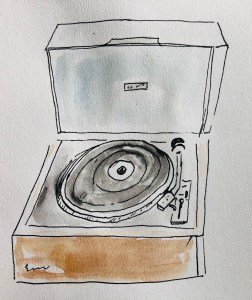
When I got my own turntable, I would splay the records around my room, grab them at random, listen to one while I read the lyrics and committed them to memory, try to understand the philosophy of the occasional mission statement. I studied the photographs — both the cover and the pictures inside, looking for a clue to…something. Whatever it was I searched for, I’m not sure if I found it but I did find other things: dreaminess, stimulation, creativity. Music I never would have heard today because I wouldn’t have had the patience. Given the choice of staying where I was or making my way over to the turntable to skip past the “dull” songs, I chose physical inertia. And often I found that those “dull” songs were pretty good. A few became favorites.

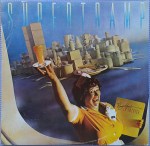
Supertramp’s Breakfast of Champions (my first concert)
Liner Notes for Breakfast of Champions

Okay, so my teenagers have their phones with pretty much any song available to them instantly through Spotify. Is that a good thing? Yes and no. The access is great (as are the options, with more and more artists able to produce music), but lost is the artistry of the album. An even worse loss is the visual stimulation, which I am fairly sure both kids would appreciate but which, like so many of the holes the internet has carved out in our lives, they don’t miss because they never had it.

Things I Learned Today

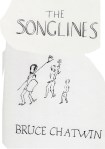
Parts of Bruce Chatwin’s book, Songlines, about the songs of Australian Aboriginals, were fabricated. And Chatwin never consulted the Aboriginals before publishing it.

Thirty-one kids tested positive for COVID at Camp Pontiac. The camp costs around $13,000 per camper. One family sent a private jet to pick up their kid, a fact most kids would find enviable and most parents would find depressing.

Deer really really like salt blocks and will crash through (and largely destroy) two laboriously erected makeshift fences to get at one.

Women in Charge

At least here in the United States, it feels like a continued long slog until women achieve anything close to parity. So it’s always interesting to look overseas to see what it might look like (even if the “research” takes the form of TV shows).

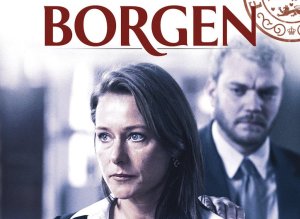
A few years ago I fell hard for the Danish series, Borgen. It was like a much better version of West Wing, where the Prime Minister was a progressive woman and she coped with nasty politics, enormous male egos, a fraying marriage and the struggle of raising kids while working a stressful job. Watching it, I got the feeling that any attempt to handle all these variables would bring a man, sobbing, to his knees.

Black Widow

Recently, I discovered the Dutch series, Black Widow, a much darker scenario in which the wife of a man who deals hash but gets in over his head with cocaine and is murdered, takes over the business. Over three seasons, she basically becomes a female Tony Soprano, but smarter, way more likable and also deals with sexism, a new relationship and raising kids. All without a therapist.

I don’t watch much tv; I know there are several shows where women are in power positions, but Black Widow especially feels like something different. Carmen, the boss, is an excellent mother, trying to keep her kids away from the business, listening to them when they make mistakes, always supportive. When it comes to ordering hits on those trying to bring her down (and there are a lot of them), she doesn’t act out of spite or hormonal rage, but weighs her options before going ahead with it or, occasionally, not. The men around her, meanwhile, fire away like all of Amsterdam is a skeet range.

Even the men who work for these women let their sexist attitudes fly, which makes it feel more realistic (and depressing). It does give the impression that we are a very very long way from the time when a woman can order a vote — or a hit — and the men follow through with respect. But at least we can watch and dream.

Nature Fantasy vs Documentary

Some people fantasize about a glamorous life in a penthouse apartment; others imagine a sprawling beach house. I have always had a dream of moving my family from our house in the country to a treehouse in the deep deep woods, far from pavement and internet, where we live off our wits and…well, the details are fuzzy.

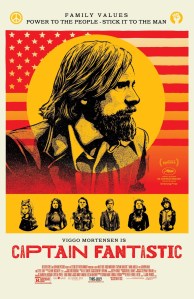
I am absolutely one hundred percent alone among my family members in having this fantasy, so I am forced to live it out through books and movies. A few years ago, I was beside myself to hear about Captain Fantastic, which (other than the mother being dead) was pretty much exactly what I wanted: A close family, intimacy with nature and surviving on what they could harvest, grow, trap, kill. Plus, they were schooled in classic education. Plus…well…Viggo Mortensen. Once they were forced to go to the city, they pretty much lost me, but I dined out for months on the first half of the movie.

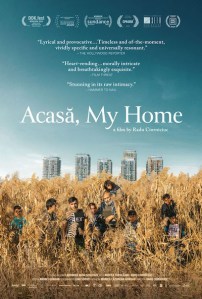
Then last weekend, we stumbled across a new documentary, Acasa, My Home, which is basically a real-life Captain Fantastic set in Romania. Though without classic education or Viggo Mortensen. A large family lives in a nature park adjacent to Bucharest, fishing and raising chickens and pigs and harvesting what they can. They were happy, but it was also not easy. They too were forced into the city, and it did not go smoothly, at least for the parents. Even the kids wanted to go back to their old home, but were not allowed for many reasons, primarily lack of education and the hygienic shortfalls of their wild life (in which they literally shared their beds with birds and pigs). Even though I rooted against the authorities, I did so knowing they were pretty much right in forcing them out of the park.

Since there was never a chance of relocating to a remote mountain top or Scottish Highland, it’s not as if my bubble was completely burst. And yet it dampen my fantasy life a bit. Documentaries can be dangerous in that way. Sometimes you just want to believe the Hollywood version.

Birds on the Brain

Yesterday I sat for a good half hour on the ground underneath a bluebird which was conversing deeply with another bluebird some distance away. I had no idea what it was saying (hopefully “Let’s move into one of the birdhouses the humans put up last weekend”). It was one of the best parts of my day.

Since Covid, bird watching has become a “thing.” At my local bookstore, recent releases about bird behavior (David Allen Sibley’s What It’s Like to Be a Bird; The Bird Way, by Jennifer Ackerman) were backordered for weeks. Apparently podcasters stalked Jenny Odell, author of the altogether fantastic How to Be Alone, which is filled with her bird obsessions because my feed was filled with interviews with her.

I say this not out of complaint but a certain camaraderie. My bird obsession started a few years ago, but before I moved to the country I tended to put birds into categories such as “brown bird” or “duck.” In New York City, a nesting pair of red-tailed hawks held the city in thrall; now I regularly wave red-tailed hawks way from our chickens.

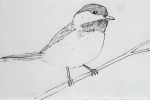
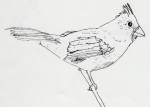
We’ve set up bird feeders around our house, with the result that our place is teeming with different species. This time of year the chickadees, nuthatches, titmouse and cardinals are joined by red-winged blackbirds, Carolina wrens, finches and sparrows galore. Sometimes I will sit and watch them interact, anthropomorphizing them to a degree which would make scientists roll their eyes. The bully bluejays, delicate titmouse, low-profile juncos. I could write the avian version of a high school drama series.

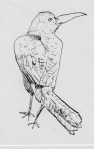
The thing is, they are amazing. Crows recognize individual humans and if you piss them off (bother one or cause them some harm), they might attack you; on the other hand, leave them presents and they might reward you with a gift. Birds’ migration paths follow the Earth’s magnetic field, something humans cannot even detect.

We could all do worse than develop an obsession. As I write this, two finches are at my feeder taking turns feeding each other while a red-bellied woodpecker is at the other feed methodically spilling sunflower seeds on the ground and two female cardinals are bickering. It is, at the very least, an excellent procrastination device.